Understanding Medicaid Home Care Waivers: A State-by-State Overview
Medicaid Home and Community-Based Services waivers are one of the most important — and most underused — ways to pay for home care. Here is how they work and how to access them in your state.
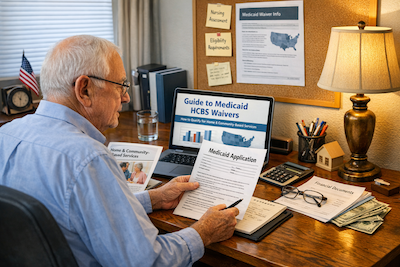
Every year, millions of older Americans and their families face one of the most stressful financial questions in aging: how do you pay for home care? Most families quickly discover that Medicare covers only limited, short-term skilled care — not the ongoing personal assistance that many seniors need. What far too many families never learn is that Medicaid offers a powerful set of programs specifically designed to pay for long-term home care services. These programs, known as Home and Community-Based Services waivers, exist in every state and cover everything from personal care aides to home modifications. If your loved one has limited income and assets and needs regular help at home, there is a real chance that Medicaid can cover it.
This guide explains how HCBS waivers work, who qualifies, what services they cover, and how to navigate the application process.
What Are Medicaid HCBS Waivers?
Medicaid Home and Community-Based Services (HCBS) waivers allow states to use Medicaid funding to pay for care delivered in a person's home or community rather than in a nursing home or institutional setting. The concept is straightforward: if someone qualifies for the level of care a nursing home provides, the state can "waive" certain Medicaid rules and instead pay for that care to be delivered at home — usually at a fraction of the cost.
The federal government provides the framework, but each state designs and administers its own waiver programs. This means the specific services offered, the eligibility criteria, and even the names of the programs vary significantly from state to state. Texas calls its program STAR+PLUS. California runs In-Home Supportive Services (IHSS). New York offers the Consumer Directed Personal Assistance Program (CDPAP). The underlying concept is the same, but the details differ in ways that matter.
The History Behind These Programs
HCBS waivers trace their origins to 1981, when Congress added Section 1915(c) to the Social Security Act. Before that, Medicaid had a strong institutional bias — if you needed long-term care, Medicaid would pay for a nursing home, but it would not pay for comparable services delivered at home. The 1915(c) provision changed that by allowing states to apply for federal waivers to serve people in their homes and communities instead.
The movement accelerated dramatically after the 1999 Supreme Court decision in Olmstead v. L.C., which ruled that unjustified institutionalization of people with disabilities is a form of discrimination under the Americans with Disabilities Act. The Olmstead decision created a legal imperative for states to provide community-based care options, and it remains one of the most important civil rights rulings in the history of aging and disability services.
Since then, a sustained national "rebalancing" effort has shifted Medicaid long-term care spending away from institutions and toward community-based services. Today, the majority of Medicaid long-term care dollars go to HCBS rather than nursing facilities — a reversal from just two decades ago.
Types of Medicaid Home Care Waivers
Not all Medicaid home care programs are structured the same way. Understanding the different types helps you know what to look for in your state.
1915(c) Waivers
These are the original and most common HCBS waivers. Each state can operate multiple 1915(c) waivers targeted at different populations — older adults, people with physical disabilities, people with intellectual and developmental disabilities, and others. A state might run one waiver specifically for seniors and adults with physical disabilities and a separate waiver for people with traumatic brain injuries. These waivers require that participants meet a nursing-home level of care to qualify, and they typically have a capped number of participants, which is why waiting lists exist.
1915(i) State Plan Amendments
Unlike 1915(c) waivers, 1915(i) programs do not require participants to meet a nursing-home level of care. The eligibility criteria are less restrictive, which means they can serve people earlier in the trajectory of their care needs — before they reach a crisis point. However, the range of services may be more limited. Not all states offer 1915(i) options, but for those that do, they can be a valuable entry point for seniors who need some help but do not yet need the intensive level of support a nursing home provides.
1915(k) Community First Choice
Community First Choice (CFC) is a Medicaid state plan option that provides home and community-based attendant services to people who meet an institutional level of care. States that adopt CFC receive an enhanced federal matching rate — an extra six percentage points — which gives them a strong financial incentive to participate. CFC programs must offer personal care services, and they must include a self-directed care option. As of now, a growing number of states have adopted or are exploring CFC, and it is often one of the most robust home care benefit options available.
Who Qualifies for Medicaid HCBS Waivers?
Eligibility for HCBS waivers involves two separate assessments: financial eligibility and functional eligibility. You must meet both.
Financial Eligibility
Medicaid is a means-tested program, so your income and assets must fall below certain thresholds. The specific limits vary by state, but general guidelines include:
- Income limits: Many states use the "special income rule" for institutional care, which sets the income limit at 300 percent of the Supplemental Security Income (SSI) federal benefit rate. In 2026, this works out to roughly $2,900 per month for an individual. Some states have lower limits, and some use different methodologies.
- Asset limits: Most states set the asset limit at $2,000 for an individual. Your home, one vehicle, personal belongings, and certain other assets are typically excluded from the count. If you are married, there are spousal impoverishment protections that allow the non-applicant spouse to retain a significantly higher level of assets and income.
- Spend-down provisions: If your income is slightly above the limit, many states allow you to "spend down" by deducting medical expenses from your countable income. Some states also offer Medicaid planning tools such as qualified income trusts (also called Miller Trusts) to help people who are over the income limit become eligible.
Financial eligibility rules vary enough from state to state that what disqualifies you in one state might be acceptable in another. Consulting with your local Medicaid office or an elder law attorney is almost always worthwhile.
Functional Eligibility
Beyond the financial requirements, you must demonstrate that you need a level of care comparable to what a nursing home provides. This is assessed through a functional evaluation — typically an in-home assessment conducted by a nurse or social worker from the state Medicaid agency or its contractor.
The assessment evaluates your ability to perform activities of daily living (ADLs) such as bathing, dressing, toileting, and transferring, as well as instrumental activities (IADLs) like managing medications and preparing meals. Cognitive impairment is also factored in. The general standard is that you need regular, ongoing assistance with multiple daily activities to qualify.
What Services Are Covered?
One of the strengths of HCBS waivers is the breadth of services they can cover. While every state designs its own service package, common covered services include:
- Personal care assistance: Help with bathing, dressing, grooming, toileting, mobility, and other activities of daily living. This is the core service most families are looking for.
- Homemaker and chore services: Light housekeeping, laundry, meal preparation, and grocery shopping.
- Respite care: Temporary relief for family caregivers, available in-home or at an adult day center or facility. Most waivers include a set number of respite hours per year.
- Adult day health services: Structured daytime programs that provide supervision, social activities, meals, and sometimes health monitoring outside the home.
- Home modifications: Ramps, grab bars, widened doorways, accessible bathrooms, and other modifications that make it safer to live at home. Most states cap the amount they will spend on modifications.
- Assistive technology and medical equipment: Items like personal emergency response systems, specialized beds, wheelchair ramps, and communication devices.
- Skilled nursing and therapy: Some waivers include periodic skilled nursing visits or physical, occupational, and speech therapy beyond what Medicare covers.
- Care management: A dedicated case manager who helps organize services and monitor the care plan.
- Transportation and meals: Non-emergency medical transportation and home-delivered meal programs.
Many states set an individual cost cap — often a percentage of the average cost of nursing home care — and allow participants to receive any combination of covered services up to that amount.
How to Apply: A Step-by-Step Guide
Navigating the Medicaid HCBS application process can feel overwhelming, but breaking it into steps makes it more manageable.
Step 1: Contact Your Local Medicaid Office or Aging Agency
Start by reaching out to your state Medicaid agency or your local Area Agency on Aging (AAA). You can find your nearest AAA through the Eldercare Locator at eldercare.acl.gov or by calling 1-800-677-1116. These agencies can tell you which waiver programs are available in your state, whether there are open slots or waiting lists, and how to begin the application.
Step 2: Complete the Medicaid Financial Application
Submit a formal Medicaid application documenting your income, assets, and expenses. Gather bank statements, tax returns, Social Security award letters, pension statements, and property deeds. Many states now allow online applications.
Step 3: Request a Functional Assessment
Once financial eligibility is established (or sometimes concurrently), the state will arrange a functional assessment to determine whether you meet the level-of-care requirement. A nurse or social worker will visit your home or conduct the assessment at a local office. Be honest and thorough during this assessment — describe your worst days, not your best. If you sometimes fall, sometimes forget medications, or sometimes cannot get out of bed, make sure the assessor knows.
Step 4: Develop a Care Plan
If you are found eligible, a case manager will work with you and your family to develop an individualized care plan. This plan specifies which services you will receive, how many hours per week, and which providers will deliver them. You have input into this plan, and you should advocate for the services you truly need.
Step 5: Choose Your Providers
In most states, you can choose from a list of approved home care agencies or, in programs that allow self-direction, hire your own caregivers — sometimes including family members. Your case manager can provide a list of Medicaid-participating agencies in your area.
Step 6: Begin Services
Once the care plan is approved and providers are in place, services begin. Your case manager will check in periodically to reassess your needs and adjust the plan as your situation changes.
The Waiting List Reality
Many states have significant waiting lists for HCBS waiver slots. Because 1915(c) waivers cap the number of participants, demand often exceeds supply. Wait times range from a few months to several years, and some states have tens of thousands of people waiting. This does not mean you should delay applying — the opposite is true.
Strategies for Dealing with Waiting Lists
- Apply as early as possible. Your place in line typically starts from the date of your application. Even if your loved one does not need intensive services today, getting on the list now could save you years of waiting.
- Ask about other programs. While waiting for a 1915(c) waiver, you may qualify for Medicaid state plan services, 1915(i) services, or other state-funded home care programs that do not have waiting lists.
- Contact your Area Agency on Aging. AAAs often know about local resources, grant-funded programs, and nonprofit services that can bridge the gap while you wait.
- Check your status regularly. Call the waiver program periodically to confirm you are still on the list and to update your contact information. People do fall off lists due to administrative errors.
- Explore emergency or priority slots. Most states reserve some waiver slots for people in crisis — those at imminent risk of institutionalization, experiencing abuse or neglect, or being discharged from a hospital with no safe home care plan. If your situation is urgent, make sure the program knows.
Self-Directed Care Options
Many HCBS waiver programs offer the option to self-direct your care. Under self-direction, you (or a designated representative) act as the employer of your caregivers — you recruit, hire, train, and supervise your own workers. In many cases, you can hire family members or friends as paid caregivers, compensating them for work they may already be doing.
Many states offer self-directed options within their waiver programs, though the specific rules about who can be hired vary. If self-direction interests you, ask your case manager whether it is available in your state and what the requirements are. Most self-directed programs provide a fiscal intermediary — a third-party organization that handles payroll, taxes, and workers' compensation — so you do not have to manage those administrative details yourself.
Notable State Programs
While every state runs HCBS programs, a few stand out for their scope and the number of people they serve.
New York's CDPAP is one of the largest self-directed home care programs in the nation. It allows recipients to hire family members as paid caregivers and covers both personal care and skilled nursing tasks. California's IHSS serves over 700,000 people, making it the largest publicly funded home care program in the country, with relatively straightforward enrollment. Texas STAR+PLUS integrates acute care and long-term services through managed care organizations that coordinate all Medicaid benefits including home care. Pennsylvania's Community HealthChoices similarly delivers HCBS through managed care and has helped the state shift significant spending from nursing homes to community-based settings.
How to Find Agencies That Accept Medicaid
Once approved for a waiver, you need to find an agency that participates in the program. Not all agencies accept Medicaid, and quality varies. Start by asking your case manager for a current provider list. Check that any agency you consider is state-licensed and has no outstanding complaints. Ask about caregiver background checks, training requirements, and supervision practices. If possible, interview the agency and speak with current clients before committing — this is someone who will be in your loved one's home regularly.
Moving Forward
Medicaid HCBS waivers represent one of the most significant funding sources for home care in the United States, yet many families who could benefit never apply because they do not know these programs exist. If your loved one needs help at home and has limited financial resources, the application process takes patience, but the potential benefit — reliable, funded home care that allows aging safely at home — makes the effort worthwhile.
If you are looking for home care agencies in your area that accept Medicaid, browse our directory to find providers near you. You can search by city and state to see agencies that serve your community, including those that participate in Medicaid waiver programs.