Red Flags to Watch for When Hiring a Home Care Agency
A bad home care agency can put your loved one at risk. Learn the warning signs to watch for during your search and after care begins so you can protect your family.
Most home care agencies are staffed by compassionate, hardworking professionals who genuinely want to help your loved one live safely and comfortably at home. But not every agency operates with the same standards, and not every caregiver is the right fit. When you are entrusting someone with the daily well-being of a vulnerable family member, knowing what to watch for can make all the difference between a positive experience and a harmful one.
This guide is not meant to make you suspicious of every agency you encounter. It is meant to arm you with the knowledge to recognize warning signs early — both during the hiring process and after care has begun — so you can act quickly and protect the person you love.
Red Flags During the Search Process
The way an agency handles your initial inquiries tells you a great deal about how they will handle your loved one's care. Pay close attention during these early interactions.
They Skip the In-Home Assessment
A reputable home care agency will always want to conduct an in-home assessment before care begins. This visit allows a care coordinator to meet your loved one, evaluate the home environment, understand medical needs, and develop a personalized care plan. If an agency is willing to send a caregiver without ever setting foot in the home or meeting the client, that is a significant warning sign. It suggests the agency is more interested in filling shifts than providing appropriate, individualized care.
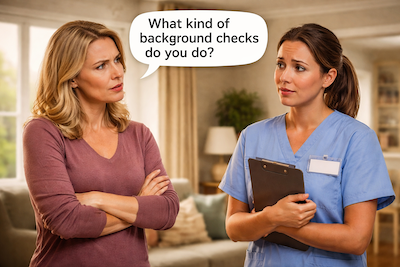
They Cannot Explain Their Screening Process
Every family deserves to know who is coming into their loved one's home. When you ask an agency how they screen their caregivers, you should receive a clear, specific answer. A trustworthy agency will describe their process for conducting criminal background checks, verifying professional certifications, checking references from previous employers, and confirming that caregivers are legally authorized to work.
If the person you speak with is evasive, vague, or dismissive when you ask about screening, consider it a serious concern. Phrases like "we check everyone out" or "don't worry, all our people are great" without any specifics should raise your guard. You are looking for a process, not a platitude.
They Pressure You to Sign a Long-Term Contract
Quality home care agencies understand that families need flexibility. Care needs change, circumstances shift, and sometimes the arrangement simply does not work out. A reasonable agency will offer clear terms with manageable notice periods for cancellation — typically two weeks or thirty days.
Be cautious of any agency that pressures you to sign a lengthy contract, requires large upfront payments, or makes cancellation unnecessarily difficult. You should never feel locked in. If an agency is confident in the quality of its service, it should not need to trap you with contractual obligations.
They Cannot Provide Proof of Insurance
Home care agencies should carry both general liability insurance and workers' compensation coverage. Liability insurance protects your family if a caregiver accidentally causes damage to your home or property. Workers' compensation protects the caregiver — and you — if they are injured while working in your loved one's home. Without workers' compensation coverage, your family could potentially be held liable for a caregiver's on-the-job injury.
Ask for certificates of insurance and verify that coverage is current. A legitimate agency will have these documents readily available. If an agency dodges this request or claims they do not need insurance, walk away.
They Refuse to Provide References
Any established home care agency should be able to connect you with current or former clients (or their family members) who can speak to the quality of care they received. While privacy considerations may limit what an agency can share without client consent, a flat refusal to provide any references is a red flag.
Similarly, be cautious if the agency has no online reviews and no verifiable track record.
Their Prices Are Unusually Low
Home care has real costs — fair caregiver wages, insurance premiums, training programs, administrative overhead, and regulatory compliance. When an agency quotes a rate that is dramatically lower than every other provider in your area, ask yourself how they are achieving that price. In many cases, the answer involves paying caregivers less, skipping background checks, cutting training programs, or operating without proper insurance.
This does not mean you should always choose the most expensive option. But if a price seems too good to be true, it probably is. Compare rates from at least three agencies in your area to understand the local market.
Red Flags After Care Begins
Some problems only become visible once a caregiver is in your loved one's home. Staying attentive during the first weeks and months of care is essential.
Frequent Caregiver Turnover
Consistency matters enormously in home care, especially for seniors with dementia or cognitive decline. If the agency keeps sending different caregivers with little explanation, it creates confusion and anxiety for your loved one and prevents the kind of trusting relationship that makes care effective.
Some turnover is normal in the home care industry. But if your family is seeing a revolving door of unfamiliar faces every week, it may indicate that the agency has trouble retaining staff — often a sign of poor management or inadequate pay. Ask the agency directly why turnover is happening and what they plan to do about it.
Missed Visits Without Notice
A caregiver who does not show up — and an agency that does not notify you — is a serious problem. Your loved one may depend on that visit for medication reminders, meals, or help with mobility. A missed visit is not just an inconvenience; it can be a safety issue.
Reliable agencies have systems in place to track caregiver arrivals and departures. They should notify you promptly if a caregiver is running late or unable to make a shift, and they should have a backup plan for coverage. If missed visits happen more than once without adequate communication, the agency is failing at a fundamental level.
The Caregiver Uses Your Loved One's Belongings
A professional caregiver should not be using your loved one's phone to make personal calls, driving their car for personal errands, eating their food without permission, or borrowing money — no matter how small the amount. These boundary violations may seem minor at first, but they can escalate and are often early indicators of exploitation.
If you notice these behaviors, raise the issue with the agency immediately. A responsible agency will address it directly and set clear expectations with the caregiver.
Unexplained Bruises, Injuries, or Decline in Health
Any new, unexplained bruises, cuts, or injuries on your loved one should be taken seriously. While seniors can bruise easily and falls do happen, a pattern of unexplained injuries — particularly in areas that are not typical for accidental bumps, such as the upper arms, inner thighs, or torso — warrants immediate investigation.
Similarly, watch for sudden weight loss, dehydration, poor hygiene, or worsening of conditions that were previously stable. These can be signs of neglect rather than abuse, but they are equally concerning and demand attention.
Changes in Mood or Behavior
If your loved one becomes withdrawn, anxious, fearful, or agitated after beginning home care — especially if they were not exhibiting these behaviors before — pay attention. Sudden personality changes can be a response to mistreatment, intimidation, or emotional abuse.
This is particularly important for seniors who have difficulty communicating due to dementia or other conditions. They may not be able to tell you something is wrong, but their behavior may be signaling it.
Financial Irregularities
Keep a close eye on your loved one's financial accounts, especially if the caregiver has any access to money, credit cards, or checkbooks. Watch for unexplained withdrawals, missing cash, new credit card charges, changes to financial documents, or your loved one suddenly giving gifts to the caregiver.
Financial exploitation is one of the most common forms of elder abuse. Consider limiting the caregiver's access to financial information and monitoring accounts regularly.
The Caregiver Discourages Family Visits
A caregiver who makes excuses for why family members should not visit, suggests that visits upset the client, or tries to control when and how often you see your loved one is exhibiting isolating behavior. Isolation is a hallmark tactic of abusers because it removes witnesses and makes the vulnerable person more dependent on the abuser.
A good caregiver welcomes family involvement and understands that open communication with the family is part of quality care. Any attempt to limit your access should be addressed immediately and firmly.
What to Do When You See Red Flags
Identifying a problem is only the first step. What you do next matters just as much.
Document Everything
Start keeping a written record as soon as you notice something concerning. Note dates, times, specific observations, and the names of any caregivers involved. Take photographs of injuries, save text messages or emails, and keep copies of any financial records that show irregularities. This documentation will be critical if you need to file a complaint or take legal action.
Communicate Directly with the Agency
Contact the agency's management — not just the caregiver — and describe your concerns clearly. A responsible agency will take your concerns seriously, investigate the situation, and take corrective action. Ask for a written response and a clear plan for how they will address the issue.
Pay attention to how the agency responds. Do they listen and take accountability, or do they minimize your concerns and become defensive? Their response will tell you whether this agency deserves your continued trust.
Escalate When Necessary
If the agency does not respond adequately, or if you believe your loved one is in immediate danger, do not hesitate to escalate. You have several options depending on the severity of the situation:
- File a complaint with your state's home care licensing board. Every state has an agency responsible for regulating home care providers, and they have the authority to investigate and take action.
- Contact the Long-Term Care Ombudsman program. Ombudsmen advocate for the rights of people receiving long-term care services and can help mediate disputes or investigate complaints.
- Report to Adult Protective Services (APS). If you suspect abuse, neglect, or exploitation, contact your state's APS hotline. In most states, certain professionals are mandated reporters, but anyone can — and should — report suspected elder abuse.
- Call 911. If your loved one is in immediate physical danger, do not wait. Call emergency services first, then follow up with reports to the appropriate agencies.
Switch Agencies if Needed
You are never obligated to continue with an agency that is not meeting your standards or keeping your loved one safe. If you have lost confidence in the agency, begin looking for a replacement. Most agencies can begin care within a few days, so the transition does not have to leave your loved one without support for long.
When switching, request copies of your loved one's care plan and any documentation the current agency has on file.
How to Verify an Agency Before Hiring
A little due diligence before you hire can save you from many of the problems described above.
Check State Licensing
Most states require home care agencies to be licensed. Contact your state's Department of Health or the agency that oversees home care licensing to verify that the provider holds a valid, current license. Ask whether any complaints have been filed and what the outcomes were. Many states maintain searchable online databases.
Search the Better Business Bureau
The BBB maintains records of consumer complaints and how businesses respond to them. An agency with a pattern of unresolved complaints deserves extra scrutiny. A good BBB rating does not guarantee quality care, but a poor record is a meaningful data point.
Read Online Reviews Thoughtfully
Look at reviews on Google, Yelp, and home care-specific platforms. Pay more attention to patterns than to individual reviews. A single negative review may reflect a one-time problem or an unreasonable expectation. But if multiple reviewers describe the same issues — poor communication, frequent caregiver changes, missed visits, billing problems — that pattern is worth taking seriously.
Ask for and Actually Call References
When an agency provides references, follow through. Prepare specific questions: How long have you used this agency? How does the agency handle problems when they arise? Have you experienced caregiver turnover? Would you recommend them to a friend? The answers you get from real families are often more revealing than anything on the agency's website.
Understanding Elder Abuse and Your Reporting Obligations
It is important to understand that the red flags described in this guide can sometimes point to elder abuse — a serious issue that affects millions of older Americans each year. Elder abuse can take many forms.
Types of Elder Abuse
- Physical abuse involves the use of force that results in pain, injury, or impairment. This includes hitting, pushing, rough handling, and inappropriate use of restraints.
- Emotional or psychological abuse includes verbal assaults, threats, intimidation, humiliation, and isolation. It can be harder to detect but is just as damaging.
- Neglect occurs when a caregiver fails to provide necessary care, resulting in harm. This can include withholding food, medication, hygiene assistance, or medical care.
- Financial exploitation involves the unauthorized or improper use of a vulnerable person's funds, property, or assets. It is the most commonly reported form of elder abuse.
Reporting Responsibilities
If you suspect that your loved one or any older adult is being abused, neglected, or exploited, you have a moral obligation to report it — and in many states, a legal one. Most states have mandatory reporting laws for certain professionals, but voluntary reports from family members are equally important and are taken seriously by investigators.
The Eldercare Locator (1-800-677-1116 or eldercare.acl.gov) can help you find local resources and reporting contacts. In an emergency, always call 911 first.
Staying Vigilant Without Losing Trust
Finding home care for a loved one requires a balance between healthy vigilance and reasonable trust. The vast majority of caregivers enter this profession because they care deeply about helping others. By knowing what to watch for, verifying credentials, maintaining open communication, and staying actively involved in your loved one's care, you create an environment where good caregivers can do their best work and problems are caught early.
Take the time to research agencies carefully, ask the hard questions, and trust your instincts when something does not feel right. The effort you put into finding the right agency is one of the most important investments you can make in your family member's well-being.
If you are beginning your search, Senior Home Care Finder can help you compare agencies in your area. Browse local providers, read about the services they offer, and take the first step toward finding care you can trust.