Protecting Seniors from Scams: A Guide for Families and Caregivers
Older adults are the most targeted demographic for fraud. This guide covers the most common scams targeting seniors, warning signs to watch for, and practical steps families can take to protect their loved ones.
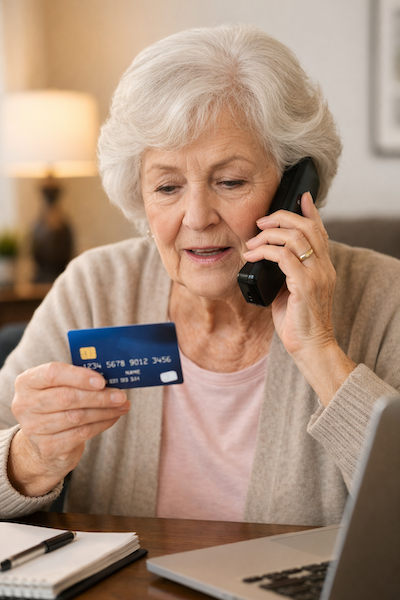
Every year, thousands of families across the country discover that someone they love has been the victim of fraud. The phone call from a confused parent admitting they wired money to a stranger. The bank statement showing thousands of dollars in unexplained withdrawals. The realization that a trusted "friend" has been systematically stealing from someone who trusted them completely.
Elder fraud is not a minor nuisance. According to the FBI's Internet Crime Complaint Center (IC3), Americans over the age of 60 lost more than $3.4 billion to fraud in a single recent year, and that figure almost certainly underestimates the true scope. Many victims never report what happened because they feel ashamed, do not realize they were scammed, or fear losing their independence if family members find out.
This guide is not meant to frighten you. It is meant to arm you with knowledge so you can protect the people you love. Understanding how scams work, recognizing the warning signs early, and putting practical safeguards in place can make the difference between a close call and a devastating loss.
Why Seniors Are Targeted
Scammers are strategic. They target older adults not because seniors are foolish, but because several factors make them more vulnerable than the general population.
Isolation
Seniors who live alone and have limited daily social contact are prime targets. Without someone nearby to consult, a person who receives a frightening phone call or a too-good-to-be-true offer has no one to say, "Wait, that does not sound right." Isolation also means fewer people are watching for changes in behavior or finances that might signal a problem.
Trust and Generational Norms
Many older adults grew up in an era when a handshake was a contract and people generally meant what they said. They may be more trusting of authority figures, less skeptical of unsolicited callers, and more willing to be polite to strangers even when something feels off. Scammers exploit that decency ruthlessly.
Cognitive Changes
Normal age-related cognitive decline can make it harder to evaluate complex financial decisions, recognize manipulation tactics, or remember the details of a suspicious interaction well enough to report it. For seniors with dementia or early-stage Alzheimer's, the vulnerability increases dramatically. They may not remember giving money away at all.
Accumulated Wealth
Older Americans are more likely to own their homes outright, have retirement savings, and carry good credit. They represent a lucrative target. A successful scam against a senior can yield tens or even hundreds of thousands of dollars in a single operation.
Reluctance to Report
Scammers know that many seniors will not report the crime. Some feel embarrassed. Others fear that their children will use the incident as evidence that they can no longer manage their own affairs. This fear of losing autonomy keeps many victims silent, which in turn emboldens the criminals.
The Most Common Scams Targeting Seniors
Fraud schemes evolve constantly, but several categories have remained stubbornly persistent because they continue to work. Knowing what these look like is the first line of defense.
Medicare and Health Insurance Fraud
Scammers pose as Medicare representatives or health insurance agents, calling seniors to "verify" their Medicare number, offer free medical equipment, or warn about changes to their coverage. Once they have a Medicare number, they can bill for phantom services, order unnecessary equipment, or steal the senior's identity outright. Legitimate Medicare representatives will never call unsolicited to ask for personal information.
The Grandparent Scam
This scheme is devastatingly effective because it exploits the strongest emotion a scammer can find: love for a grandchild. The caller pretends to be a grandchild in crisis, calling from jail, a hospital, or a foreign country. They beg for money and plead with the grandparent not to tell anyone. Variations include a caller posing as the grandchild's attorney or a bail bondsman. Advances in AI voice cloning have made these calls even more convincing, as scammers can now mimic a real grandchild's voice using audio scraped from social media.
Tech Support Scams
A pop-up appears on the computer warning of a virus. Or someone calls claiming to be from Microsoft, Apple, or the senior's internet provider, insisting the computer has been compromised. The scammer asks for remote access to the machine, then either installs actual malware, steals financial information directly, or charges hundreds of dollars for "repairs" that were never needed.
Romance Scams
These are among the most financially and emotionally destructive. The scammer builds a relationship over weeks or months through dating sites, social media, or even email, establishing genuine emotional intimacy before ever asking for money. When they do, the requests start small and escalate. Victims often lose tens of thousands of dollars before anyone intervenes, and the emotional damage can be as severe as the financial loss.
IRS and Government Impersonation
The caller claims to be from the IRS, Social Security Administration, or another government agency. They warn of unpaid taxes, a suspended Social Security number, or an outstanding warrant, and demand immediate payment, often via gift cards or wire transfer. The call may include threats of arrest, deportation, or benefit suspension. Real government agencies do not operate this way. The IRS initiates contact by mail, not by phone, and no legitimate agency demands payment via gift cards.
Sweepstakes and Lottery Scams
The senior receives a call, email, or letter announcing they have won a prize, but must pay taxes, fees, or shipping costs before collecting. There is no prize. Once the initial payment is made, the scammer continues to invent new fees, milking the victim for as long as possible. Some victims have lost their entire savings over months of escalating payments.
Home Repair and Contractor Scams
A person shows up at the door, often after a storm, offering to inspect the roof, repave the driveway, or perform other home repairs at a suspiciously low price. They demand payment upfront, then either disappear, perform shoddy work, or use the access to case the home for a later burglary. Seniors who live alone and own their homes are particularly vulnerable to this in-person approach.
Warning Signs That a Senior Is Being Scammed
Scams often unfold over days, weeks, or even months. The earlier you recognize the signs, the more you can limit the damage.
Financial Red Flags
- Unusual withdrawals or transfers. Large or frequent withdrawals that do not match the senior's normal spending patterns, especially wire transfers or large cash withdrawals.
- New accounts or credit cards. Accounts the senior did not open, or cannot explain.
- Unpaid bills despite adequate funds. Money is going somewhere, but not where it should be.
- Purchases of gift cards in large quantities. This is one of the most reliable indicators. No legitimate entity requests payment in gift cards.
- Changes to wills, power of attorney, or beneficiaries. Especially if the changes benefit someone unfamiliar to the family.
Behavioral Red Flags
- Secrecy about finances or phone calls. A parent who was always open about money suddenly becomes defensive or evasive.
- New "friends" or relationships that the senior is reluctant to discuss, especially if they have never met the person in real life.
- Fear, anxiety, or agitation that is out of character, particularly around the phone or mail.
- Missing mail. Scammers sometimes redirect mail to intercept bank statements and other documents.
- Reluctance to make eye contact or discomfort when financial topics come up.
- Isolation from family and friends. Scammers often encourage victims to distance themselves from people who might intervene.
Prevention Strategies That Actually Work
You cannot eliminate every risk, but you can dramatically reduce vulnerability with a combination of practical measures and open communication.
Have the Conversation Early
Talk with your loved one about scams before anything happens. Frame it as something that affects everyone, not just seniors. Share stories from the news. Make it clear that falling for a scam is not a sign of weakness or incompetence, and that you would always rather help than judge. This conversation is far easier to have before a crisis than after one.
Set Up Call Screening
Register your loved one's phone number on the National Do Not Call Registry (donotcall.gov). Enable call screening or blocking features on their phone. Many carriers offer free robocall-blocking tools. Consider a call-blocking device designed specifically for landlines, which many seniors still use as their primary phone.
Protect the Mail
A locked mailbox prevents theft of bank statements, checks, and other sensitive documents. If your loved one receives a high volume of sweepstakes mailings, you can reduce them through the Direct Marketing Association's opt-out service. Consider switching important accounts to paperless statements where possible.
Monitor Finances
With your loved one's permission, set up account alerts for transactions above a certain threshold. Review bank and credit card statements regularly. A trusted family member should be authorized to view accounts even if they are not making transactions. Many banks now offer elder financial protection programs that flag unusual activity.
Establish Power of Attorney
A durable financial power of attorney allows a trusted family member to manage finances if the senior becomes unable to do so. This is best done early, while the senior is fully competent, and should be treated as a practical planning step rather than a loss of independence. An elder law attorney can help structure this to balance protection with autonomy.
Limit Online Exposure
Help your loved one adjust privacy settings on social media. Scammers mine platforms like Facebook for personal details they can use to make their approaches more convincing. A grandparent scammer who knows the grandchild's name, school, and recent vacation destination is far more believable than one who does not.
Create a Verification Protocol
Agree on a family code word that a real grandchild would use if they ever called in a genuine emergency. Establish a rule that no one in the family will ever ask for money via gift cards or wire transfer. Make it easy for your loved one to pause and verify by calling a family member before responding to any financial request.
How Home Caregivers Help Protect Against Scams
One of the most overlooked benefits of in-home care is the protection it provides against fraud. A caregiver who spends regular time in the home creates a natural barrier against many of the conditions that scammers exploit.
Reducing Isolation
Companionship is the single most powerful defense against scam vulnerability. A senior who has regular, meaningful human contact is less likely to engage with a suspicious caller out of loneliness, less susceptible to romance scams, and more likely to mention a strange interaction to someone who can help evaluate it. Companion care does not just improve quality of life. It closes the door on one of the primary avenues scammers use to reach their victims.
Monitoring for Unusual Activity
A caregiver who is present in the home regularly may notice things a long-distance family member cannot: an unusual number of phone calls, unfamiliar visitors, stacks of sweepstakes mail, gift card receipts, or a senior who seems anxious or secretive. They can alert family members to changes in behavior or spending patterns before significant damage occurs.
Providing a Trusted Sounding Board
When a suspicious call comes in and a caregiver is present, the senior has someone to turn to immediately. That moment of consultation, before any money changes hands, can be the difference between a near-miss and a catastrophe. Caregivers can be briefed on common scam tactics so they know what to watch for and how to respond supportively if they suspect something is wrong.
What to Do If a Senior Has Been Victimized
If you discover or suspect that your loved one has been scammed, act quickly but compassionately. The priority is to stop the bleeding, then to report and recover.
Immediate Steps
- Do not blame the victim. Shame and judgment will only make the senior less likely to cooperate or disclose the full extent of what happened. Reassure them that this is not their fault and that you are there to help.
- Contact the bank or financial institution immediately. They may be able to freeze accounts, reverse transactions, or flag the account for monitoring.
- Change passwords and PINs for any compromised accounts, email, and online banking.
- Place a fraud alert or credit freeze with the three major credit bureaus (Equifax, Experian, TransUnion) to prevent new accounts from being opened in the senior's name.
Reporting the Crime
- Adult Protective Services (APS). Every state has an APS office that investigates elder abuse, including financial exploitation. Find your state's APS through the Eldercare Locator at eldercare.acl.gov or by calling 1-800-677-1116.
- Federal Trade Commission (FTC). Report fraud at reportfraud.ftc.gov. The FTC uses these reports to build cases against scam operations.
- FBI Internet Crime Complaint Center (IC3). File a report at ic3.gov, particularly for internet-based or phone-based scams.
- Local law enforcement. File a police report. Even if local police cannot investigate every case, the report creates a record that may be needed for insurance claims or legal proceedings.
- State Attorney General's Office. Many state AGs have elder fraud units and consumer protection divisions.
Recovery Resources
- AARP Fraud Watch Network (aarp.org/fraud) offers a helpline staffed by trained volunteers who can provide guidance and emotional support to fraud victims.
- National Elder Fraud Hotline (1-833-FRAUD-11 / 1-833-372-8311) is staffed by case managers who can help victims navigate the reporting process and connect with local resources.
- Identity Theft Resource Center (idtheftcenter.org) provides free assistance to victims of identity theft, including help with credit restoration.
Building a Culture of Protection
Protecting a senior from scams is not a one-time conversation or a single security measure. It is an ongoing commitment that combines practical safeguards with emotional support. The goal is not to restrict your loved one's independence but to create an environment where they feel empowered to question suspicious contacts, comfortable asking for help, and supported rather than judged if something goes wrong.
Families who stay engaged, visit regularly, communicate openly about finances, and ensure their loved one has consistent companionship are doing more to prevent elder fraud than any single technology or security tool ever could.
If your family is exploring ways to reduce a loved one's isolation and provide the kind of daily companionship that makes seniors less vulnerable to scams and exploitation, in-home companion care may be worth considering. A trusted caregiver in the home does more than help with daily tasks. They become a consistent, caring presence that helps keep your loved one safe, connected, and protected. You can browse local home care agencies in your area through our national directory to find the right fit for your family.