Home Safety Checklist for Seniors: A Room-by-Room Guide
Falls are the leading cause of injury for adults over 65. This room-by-room safety checklist helps you identify and fix hazards so your loved one can age in place safely.
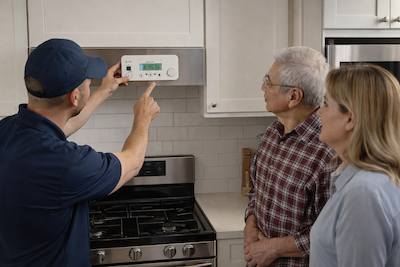
Every year, roughly three million older adults are treated in emergency departments for fall-related injuries. Many of those falls happen at home, in rooms the person has walked through thousands of times. The cruel irony of aging in place is that the home you know best can quietly become the most dangerous place you spend time.
The good news is that most household hazards are fixable, many in a single afternoon. This room-by-room checklist will help you walk through your loved one's home with fresh eyes, identify the risks, and take practical steps to eliminate them. Grab a notepad, start at the front door, and work your way through.
Bathroom
The bathroom is the single most dangerous room in the house for seniors. Hard surfaces, water, and the physical demands of bathing and toileting create a perfect storm of fall risk.
Grab Bars
- Install grab bars next to the toilet, on both sides if possible. Mount into wall studs or with toggle bolts rated for at least 250 pounds. Suction-cup grab bars are unreliable and should not be used as a primary support.
- Install grab bars inside the shower or tub, both vertically (for stepping in and out) and horizontally (for steadying yourself while standing).
- Consider an L-shaped grab bar near the shower controls so your loved one does not have to reach across a wet surface.
Shower and Tub Safety
- Place non-slip mats or adhesive strips inside the tub or shower floor. Replace them when they start to curl or lose grip.
- If stepping over a tub wall is becoming difficult, consider a walk-in shower conversion. This is one of the highest-impact bathroom modifications you can make.
- Add a shower chair or transfer bench so bathing can happen while seated. Choose one with rubber-tipped legs and a backrest.
- Install a handheld showerhead on a slide bar. This allows your loved one to shower while seated and control the water direction without twisting or reaching.
Toilet Area
- If your loved one struggles to sit down or stand up from the toilet, install a raised toilet seat. Models with built-in armrests provide additional stability.
- Make sure the toilet paper holder is within easy reach and does not require leaning or twisting.
General Bathroom Tips
- Use a nightlight or motion-activated light so your loved one never enters the bathroom in the dark.
- Remove bath mats that slide. Replace them with mats that have strong non-slip backing, or skip them entirely and use non-slip strips on the floor instead.
- Keep frequently used items — soap, shampoo, towels, toiletries — at waist height so there is no bending or overhead reaching required.
- Make sure the bathroom door can be unlocked from the outside in case of an emergency.
Kitchen
The kitchen presents a unique combination of risks: heat, sharp objects, hard flooring, and the fatigue that comes from standing while preparing meals.
Stove and Cooking Safety
- If your loved one uses a gas stove and has any history of forgetfulness, consider switching to an induction cooktop. Induction surfaces only heat when a compatible pan is placed on them and cool quickly.
- Install an automatic stove shut-off device that detects when a stove has been left unattended and turns it off.
- Keep a fire extinguisher within reach — mounted on the wall, not tucked behind something under the sink. Make sure your loved one knows how to use it, and check the expiration date.
- Keep dish towels and anything flammable away from the stove surface.
Organization and Accessibility
- Move everyday dishes, glasses, and cooking tools to lower cabinets and countertop level. Nothing your loved one uses daily should require a step stool.
- If a step stool is still used occasionally, replace it with a sturdy model that has a handrail and wide, non-slip steps.
- Store heavy items like cast iron pans at waist height to avoid lifting overhead or bending low.
- Use a lazy Susan in deep corner cabinets so items are reachable without straining.
Floor and Fatigue
- Place an anti-fatigue mat in front of the sink and primary prep area. Choose one with beveled edges so it does not become a trip hazard.
- Clean up spills immediately. Keep a roll of paper towels or a mop within easy reach so there is no temptation to "get to it later."
- Make sure the floor between the kitchen and dining area is level with no transition strips that could catch a toe.
Bedroom
Falls at night — the groggy, half-asleep trip to the bathroom — are some of the most common and most dangerous falls among seniors.
Bed Setup
- Check the bed height. When sitting on the edge of the mattress, feet should be flat on the floor with knees at roughly a 90-degree angle. A bed that is too low makes standing difficult; too high increases the risk of falling when getting in.
- Consider a bed rail or assist handle that tucks between the mattress and box spring. This gives your loved one something to grip when rolling over or getting up.
- Keep a phone or medical alert device on the nightstand, within arm's reach from the bed.
Lighting and Pathways
- Install nightlights along the path from bed to bathroom. Motion-activated models are ideal because they require no fumbling for switches.
- Keep the path from the bed to the bathroom completely clear. No shoes, no extension cords, no stacks of books on the floor. Walk this path yourself in the dark to feel what it is like.
- Place a lamp on the nightstand that is easy to turn on — a touch lamp or one with a large, simple switch — so your loved one never has to cross the room in total darkness.
Clothing
- Replace slippery socks and worn slippers with non-skid footwear. Socks with rubberized grip on the soles are an inexpensive fix.
- Arrange the closet so daily clothing is between waist and shoulder height.
Living Areas
Living rooms and dens tend to accumulate furniture arrangements that made sense years ago but create obstacles now.
Rugs and Flooring
- Remove all throw rugs. This is the single most impactful fall-prevention step in most homes. If your loved one insists on keeping a rug, secure it with double-sided carpet tape and make sure the edges lie completely flat.
- Check for raised thresholds between rooms. Sand down or replace any transition strip that creates a lip higher than a quarter inch.
Furniture Arrangement
- Create wide, clear walking paths through every room. Your loved one should be able to walk from the entrance to their favorite chair without stepping over anything.
- Make sure the primary chair is the right height and firmness to make standing up easy. A seat cushion riser or a power-lift recliner can make an enormous difference.
- Remove or relocate low coffee tables, magazine racks, and ottomans that sit in walking paths.
Cords and Cables
- Secure all electrical cords against the wall using cord covers or cable clips.
- If the home relies on extension cords for daily use, hire an electrician to add outlets where they are needed. This modest investment eliminates a constant trip risk.
General Living Area Tips
- Keep a phone in every room your loved one spends time in, or ensure they wear a medical alert pendant at all times.
- Make sure remote controls, reading glasses, and other frequently used items have a consistent, reachable spot. Getting up to search for lost items is a common fall trigger.
Stairs and Hallways
A fall on stairs is far more likely to result in a serious fracture or head injury than a fall on a level surface.
Handrails
- Ensure there is a sturdy handrail on both sides of every staircase. The rails should extend the full length of the stairs and be securely mounted into wall studs.
- If the handrails are smooth or slippery, add a textured grip cover.
- Handrails should also be installed along long hallways if your loved one uses them for balance.
Lighting
- Stairs should be brightly lit from top to bottom. Install light switches at both the top and bottom of every staircase so the lights can be turned on before ascending or descending.
- Consider adding LED strip lights along the stair nosing (the front edge of each step) so the edge of each stair is clearly visible.
Stair Condition
- Make sure all stair treads are in good condition with no loose carpet, cracked wood, or uneven surfaces.
- If the stairs are hardwood or tile, add non-slip stair treads to every step.
- If stairs feel genuinely risky, consider a stair lift or a main-floor bedroom arrangement. A stair gate at the top of the stairs can serve as a reminder to avoid stairs during the night.
Hallways
- Hallways should be free of clutter, including stored boxes, shoes, and furniture that narrows the walkway.
- Add nightlights or motion-activated lights along hallways so they are never dark.
Entrance and Exterior
The path from the car to the front door is where many falls happen, especially in wet or icy conditions.
Walkways and Ramps
- Repair any cracked, uneven, or heaving sections of sidewalk or driveway. Even a half-inch lip can catch a shuffling foot.
- If there are steps at the entrance, install a sturdy handrail on at least one side, ideally both.
- If your loved one uses a walker or wheelchair, install a ramp with a gentle slope (no steeper than 1:12), non-slip surfaces, and railings on both sides.
Lighting and Visibility
- Install bright, motion-activated exterior lights at every entrance. Your loved one should never have to fumble with keys in the dark.
- Make sure the house number is clearly visible from the street for emergency responders.
Access and Security
- Consider a key lockbox mounted near the door so family members, caregivers, and emergency responders can access the home without your loved one needing to rush to the door.
- If the front door has a high threshold, add a beveled threshold ramp to reduce the tripping risk.
- Keep the porch and entryway clear of packages, welcome mats with curled edges, and potted plants that narrow the path.
Lighting Throughout the Home
Poor lighting is a factor in a disproportionate number of falls among older adults. Age-related vision changes mean seniors need two to three times more light than younger adults to see the same level of detail.
- Replace dim bulbs with bright LED bulbs throughout the home. Aim for at least 60-watt equivalent in living areas and 75-watt equivalent in task areas like the kitchen.
- Use daylight-temperature bulbs (5000K) in kitchens and bathrooms, and warmer bulbs (2700K-3000K) in bedrooms and living areas.
- Make sure every room has a light switch near the doorway so no one has to cross a dark room to turn on a lamp.
- Add motion-activated lights in closets, pantries, garages, and any area where someone might enter with full hands.
Emergency Preparedness
Even in a perfectly modified home, emergencies happen. Preparation is the difference between a bad moment and a catastrophe.
Medical Alert Systems
- If your loved one lives alone or spends significant time alone, a medical alert system is one of the most important safety investments you can make. Modern systems include wearable pendants, smartwatch-style devices, and wall-mounted buttons.
- Choose a system with automatic fall detection if your loved one might not be able to press a button after a fall.
- Test the system monthly and make sure it is worn consistently. A device in a nightstand drawer does nothing.
Emergency Information
- Post a list of emergency contacts in large print on the refrigerator. Include family members, the primary care physician, the pharmacy, and the home care agency.
- Keep an up-to-date medication list in the same visible spot. Emergency responders need this information, and in a crisis your loved one may not recall every medication and dosage.
- Make sure at least one family member has copies of medical power of attorney, advance directives, and insurance cards.
Fire and Carbon Monoxide Safety
- Test all smoke detectors and carbon monoxide detectors. Replace batteries twice a year, and replace the units themselves every ten years.
- If hearing loss is a factor, install alarms with strobe lights or bed-shaker attachments.
- Review the fire escape plan. Is there a clear path to an exterior door from the bedroom?
Technology Aids
Modern technology offers some genuinely useful tools for senior safety that were not available even a few years ago.
- Smart home devices. Voice-activated assistants can turn lights on and off, make phone calls, set medication reminders, and call for help — all hands-free.
- Smart locks. Keyless entry eliminates fumbling with keys and allows you to grant access to caregivers remotely.
- Video doorbells. These let your loved one see who is at the door without getting up, and allow family members to monitor visitors remotely.
- Medication dispensers. Automated pill dispensers organize medications by dose and time, and sound an alarm when it is time to take them. Some models lock to prevent double-dosing.
- Motion sensors. Placed in key locations, these can alert family members if your loved one has not moved through their normal routine.
The right devices can fill the gaps between caregiver visits and provide peace of mind for family members who cannot be there every day.
When to Get a Professional Home Safety Assessment
This checklist will catch the most common hazards, but it is not a substitute for a trained eye. Consider bringing in a professional if:
- Your loved one has already experienced a fall, even without injury. A fall is a strong predictor of future falls, and a professional can identify contributing factors you might miss.
- Significant mobility changes are underway — a new walker, a recent hip replacement, a progressive condition like Parkinson's disease.
- The home has structural challenges such as narrow doorways, split-level layouts, or bathrooms that are difficult to modify.
- You are unsure which modifications will provide the most benefit. An occupational therapist specializing in home modifications can help you prioritize.
Many home care agencies offer free in-home safety assessments as part of their initial consultation, with no obligation to sign up for ongoing care. If you are not sure where to start, search for a home care agency in your area, ask whether they offer a safety walkthrough, and take advantage of their expertise. A professional set of eyes on your loved one's home can uncover risks that even the most attentive family member overlooks — and it may be the step that prevents the fall that changes everything.