Fall Prevention for Seniors: Practical Steps to Keep Your Loved One Safe
One in four Americans over 65 falls each year, and falls are the leading cause of injury-related death in older adults. Here are practical, proven strategies to reduce the risk.
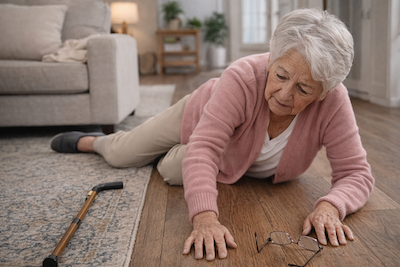
Falls are not a normal part of aging. That statement surprises many families, but it is the starting point for every serious conversation about fall prevention. Yes, the risk of falling increases as we age. But the idea that falls are inevitable leads people to accept a danger that is, in most cases, preventable. Understanding the risk, identifying the causes, and taking deliberate action can dramatically reduce the chance that your loved one becomes a statistic.
The numbers are sobering. According to the Centers for Disease Control and Prevention, one in four Americans aged 65 and older falls each year. That translates to roughly 36 million falls annually. Of those, about three million result in emergency department visits for injuries. Falls are the leading cause of traumatic brain injury (TBI) in older adults and the leading cause of injury-related death in people over 65. More than 95% of hip fractures are caused by falls, and a hip fracture in an older adult often triggers a cascade of decline: hospitalization, surgery, immobility, loss of independence, and sometimes death within a year.
These are not small numbers, and they are not someone else's problem. If your parent or loved one is over 65, fall prevention deserves the same attention you give to managing their blood pressure or monitoring their medications.
Why Seniors Fall: Understanding the Risk Factors
Falls rarely have a single cause. They usually result from several risk factors converging at the wrong moment. Understanding those factors is the first step toward reducing them.
Medications
Certain medications significantly increase fall risk. Sedatives, sleep aids, anti-anxiety drugs (benzodiazepines), antidepressants, and opioid pain medications can all cause drowsiness, dizziness, or slowed reaction times. Blood pressure medications, particularly when a new dose is started or adjusted, can cause orthostatic hypotension, a sudden drop in blood pressure when standing up that leads to lightheadedness.
Polypharmacy, the use of five or more medications simultaneously, compounds the problem. Each additional medication introduces the potential for interactions that affect balance, alertness, or blood pressure. Research published in the Journal of the American Geriatrics Society has consistently shown that the number of medications a person takes is an independent predictor of fall risk, even after accounting for the conditions those medications treat.
Balance and Gait Changes
The systems that keep us upright, our inner ear (vestibular system), proprioception (the sense of where our body is in space), vision, and muscle strength, all decline with age. Even without a specific neurological condition, an older adult's balance reactions slow down. The steps become shorter and shuffling. The ability to recover from a stumble diminishes. Add a moment of inattention or a slightly uneven surface, and a fall becomes likely.
Vision Problems
Vision plays a critical role in balance. Cataracts, glaucoma, macular degeneration, and even outdated prescriptions reduce the ability to see obstacles, judge distances, and perceive changes in floor level. Bifocal and progressive lenses, while helpful for reading, distort depth perception when looking at the ground and have been associated with increased fall risk in older adults, particularly on stairs.
Chronic Conditions
Diabetes (which can cause peripheral neuropathy, reducing sensation in the feet), arthritis (which limits joint mobility and causes pain that alters gait), Parkinson's disease, stroke, and dementia all increase fall risk through different mechanisms. Heart conditions that cause irregular rhythms or sudden drops in blood pressure add further risk.
Home Hazards
Loose rugs, cluttered walkways, poor lighting, lack of grab bars, slippery floors, cords across pathways, and pets underfoot are all common contributors to falls in the home. The CDC estimates that more than half of all falls among older adults happen at home.
Exercise Programs That Reduce Fall Risk
If there is one intervention that stands above the rest for fall prevention, it is exercise. A Cochrane systematic review, one of the gold standards in evidence-based medicine, analyzed 108 randomized controlled trials involving more than 23,000 participants and found that exercise programs reduced the rate of falls by approximately 23%. Programs that specifically targeted balance showed even greater reductions.
Tai Chi
Tai chi has more research behind it for fall prevention than almost any other single exercise. It combines slow, controlled movements with weight shifting, which directly trains the balance reactions that deteriorate with age. Multiple studies have shown that tai chi practiced two to three times per week for at least 12 weeks significantly reduces both the rate of falls and the fear of falling. Many community centers and senior centers offer tai chi classes specifically designed for older adults.
Balance Training
Structured balance exercises do not have to be complicated. Standing on one foot while holding the back of a chair. Walking heel-to-toe in a straight line. Standing up from a seated position without using hands. Stepping over small obstacles. These exercises, performed consistently, retrain the neuromuscular pathways that prevent falls. Physical therapists can design individualized balance programs, and many can be done safely at home with minimal equipment.
Strength Training
Muscle weakness, particularly in the legs and core, is a major contributor to falls. Strength training with resistance bands, light weights, or bodyweight exercises (squats to a chair, wall push-ups, calf raises) two to three times per week has been shown to improve leg strength, walking speed, and the ability to recover from a loss of balance. The key is consistency. Benefits begin within a few weeks but require ongoing effort to maintain.
What to Look For in a Program
The most effective fall prevention exercise programs combine at least two of these elements: balance training, strength training, and flexibility work. Programs like Otago (a home-based exercise program designed by physical therapists), Stepping On, and Matter of Balance have strong research behind them. Ask your loved one's doctor or a physical therapist for a recommendation that fits their current ability level.
Medication Review
Every older adult at risk of falling should have a thorough medication review at least annually, and more often if medications change. This is not just a matter of listing pills. A pharmacist or physician should evaluate each medication for its fall risk profile, check for interactions, and ask whether each medication is still necessary.
High-Risk Medications
The American Geriatrics Society maintains the Beers Criteria, a list of medications that are potentially inappropriate for older adults. Many of the medications on this list increase fall risk. Key categories include:
- Benzodiazepines (lorazepam, diazepam, alprazolam): These are among the most strongly associated with falls. Even short-acting formulations carry significant risk.
- Sedative-hypnotics (zolpidem, eszopiclone): Sleep aids that impair balance and cognition, particularly during nighttime trips to the bathroom.
- Anticholinergics (diphenhydramine, oxybutynin): Found in many over-the-counter allergy and sleep medications. They cause drowsiness, confusion, and blurred vision.
- Blood pressure medications: Particularly alpha-blockers and some diuretics. The goal is adequate blood pressure control without causing drops upon standing.
- Opioids: Even at low doses, opioids impair reaction time and balance.
Polypharmacy
If your loved one takes five or more medications, request a comprehensive medication review. Ask the prescribing physicians whether each medication is still needed, whether the dose is the lowest effective amount, and whether non-pharmacological alternatives exist. A clinical pharmacist is often the best resource for identifying problematic interactions.
Vision Checks
An annual comprehensive eye exam is essential for fall prevention. This goes beyond a vision screening. The exam should check for cataracts, glaucoma, and macular degeneration, all of which develop gradually and may not be noticed until they have significantly impaired vision.
If your loved one wears bifocals or progressive lenses, discuss with the eye doctor whether single-vision distance glasses might be safer for walking, particularly on stairs and uneven ground. Some research suggests having a dedicated pair of single-vision glasses for outdoor walking and other activities that require clear distance vision and accurate depth perception.
Ensure that prescription updates are made promptly. Wearing an outdated prescription is a correctable risk factor that too many families overlook.
Footwear
What your loved one wears on their feet matters more than most people realize. Loose slippers, stockinged feet on hard floors, worn-out shoes with smooth soles, and high heels or platform shoes all increase the likelihood of a slip or trip.
The ideal shoe for fall prevention has a firm, low heel (no more than one inch), a non-slip rubber sole with good tread, a snug fit that does not require the toes to grip, and a back that supports the heel (no backless slides or flip-flops). Velcro closures or elastic laces can make shoes easier to put on for seniors with limited dexterity. For indoor use, well-fitting shoes with non-slip soles are far safer than socks or slippers.
Assistive Devices
Canes, walkers, and rollators can significantly reduce fall risk, but only when they are properly fitted and used correctly. An improperly sized or misused assistive device can actually increase the danger.
Canes
A cane should be sized so that the handle is at the level of the wrist crease when the user is standing upright with arms at their sides. The elbow should bend at roughly a 15 to 20 degree angle when holding the cane. The tip should have a rubber cap in good condition. A cane is typically held in the hand opposite the weaker leg.
Walkers and Rollators
Standard walkers provide the most stability but require the user to lift and advance the walker with each step. Rollators (walkers with wheels) allow a more natural gait but require adequate hand strength for braking. Both should be adjusted so the handles are at wrist height. A physical therapist can assess which device is appropriate and train your loved one in proper use, including how to navigate doorways, thresholds, and curbs.
Overcoming Resistance
Many seniors resist using assistive devices because they associate them with frailty or loss of independence. Framing the device as a tool for maintaining independence, rather than a sign of decline, can help. A physical therapist's recommendation often carries more weight than a family member's suggestion.
Home Modifications
Modifying the home environment is one of the most effective and immediate steps you can take. Many changes are inexpensive and can be completed in a weekend.
Lighting
Poor lighting is involved in a significant percentage of home falls. Ensure that all hallways, stairways, bathrooms, and pathways between the bedroom and bathroom are well lit. Install nightlights or motion-activated lights along nighttime routes. Replace any burned-out bulbs immediately. Light switches should be accessible at the entrance to every room. Consider illuminated light switches for easy visibility in the dark.
Grab Bars and Handrails
Install grab bars next to the toilet, inside the shower or tub, and at any location where your loved one needs to steady themselves. Use bars rated for at least 250 pounds, mounted into wall studs or with appropriate anchors. Ensure that stairways have sturdy handrails on both sides, extending the full length of the stairs. Loose or wobbly handrails should be repaired immediately.
Removing Trip Hazards
Remove or secure all throw rugs with double-sided tape or non-slip backing. Clear clutter from walkways and stairs. Secure electrical cords along walls and out of walking paths. Repair or replace any loose or torn carpet. Address uneven thresholds between rooms. Keep frequently used items within easy reach so your loved one does not need to use step stools or reach overhead.
Bathroom Safety
Beyond grab bars, consider a raised toilet seat (which reduces the effort needed to sit and stand), a shower chair or bench, a handheld showerhead, and non-slip mats inside the tub or shower. These modifications address the room where falls are most likely to cause serious injury due to hard, wet surfaces.
Stairs
If possible, arrange living spaces so that daily activities do not require using stairs. If stairs are unavoidable, ensure they have non-slip treads, adequate lighting, and secure handrails on both sides. Mark the edges of steps with contrasting tape if the steps are a uniform color that makes the edges hard to see.
The Role of Home Care in Fall Prevention
Professional home care aides play a direct and often underappreciated role in fall prevention. A trained caregiver in the home can assist with many of the risk factors discussed above in ways that family members may not be able to provide consistently.
Home care aides can help with safe transfers (getting in and out of bed, chairs, and the bathtub), supervised walking, and accompanying seniors on outings where uneven terrain or crowds increase fall risk. They can ensure that the home remains free of clutter, that lighting is adequate, and that the senior is wearing appropriate footwear. Aides trained in fall prevention can observe gait changes, increased unsteadiness, or new symptoms that might indicate a medication side effect or worsening condition, and communicate these observations to family members and healthcare providers.
For seniors who live alone, the presence of a home care aide during high-risk times of day, such as early morning (when blood pressure may be lowest and stiffness is greatest) or evening (when fatigue sets in), can be the difference between a safe day and a trip to the emergency room.
Many home care agencies also offer specialized fall prevention programs that include home safety assessments, exercise facilitation, and coordination with physical therapists and physicians.
What to Do After a Fall
Even with the best prevention efforts, falls can still happen. Knowing how to respond matters.
Immediate Steps
If your loved one falls and is conscious, do not rush to pull them up. Ask them to stay still for a moment and assess whether they are in pain. Check for obvious injuries: head bumps, hip or wrist pain, bleeding. If there is any possibility of a head injury, spinal injury, or hip fracture, call 911 and do not move them.
If they are not seriously injured and can move without significant pain, help them get up safely. The recommended technique is to roll onto one side, push up to a hands-and-knees position, crawl to a sturdy piece of furniture, place both hands on the furniture, and bring one foot forward to a kneeling position before standing. Practice this sequence before a fall occurs so it is familiar.
After the Immediate Crisis
Every fall, even one that does not result in injury, should be reported to the senior's primary care physician. A fall is often an early warning sign of a new medical issue, a medication problem, or a progression of an existing condition. The doctor may want to conduct a fall risk assessment, review medications, check blood pressure for orthostatic changes, evaluate vision, or refer to a physical therapist.
Document when and where the fall happened, what the person was doing, whether they lost consciousness, and any contributing factors (wet floor, poor lighting, rushing to the bathroom). This information helps the medical team identify patterns and target interventions.
Addressing Fear of Falling
After a fall, many seniors develop a fear of falling that leads them to restrict their activities. This fear is understandable, but the resulting inactivity actually increases fall risk by allowing muscles to weaken and balance to deteriorate further. Gentle encouragement, a supervised exercise program, and the reassurance that comes from home modifications and professional support can help break this cycle.
Taking the Next Step
Fall prevention is not a single action. It is an ongoing process of identifying risks, making changes, and staying vigilant as your loved one's needs evolve. The strategies outlined here, from exercise and medication review to home modifications and proper footwear, are all supported by strong evidence and can be started today.
If you are concerned about a loved one's fall risk and want professional support, a home care agency can provide trained aides who specialize in keeping seniors safe at home. Use our directory to find agencies in your area that offer fall prevention services, home safety assessments, and the kind of consistent, attentive care that helps older adults stay on their feet and maintain their independence.