30 Engaging Activities for Seniors Living at Home
Boredom and isolation are real risks for seniors living at home. Here are 30 activities that promote mental sharpness, physical health, social connection, and joy — organized by ability level.
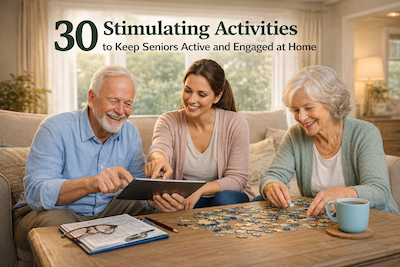
Staying active and engaged is one of the most important things a senior can do for their overall well-being. Research consistently shows that mentally stimulating activities reduce the risk of cognitive decline, physical movement supports independence, and social connection wards off the loneliness that too many older adults experience. The good news is that none of this requires a gym membership or a packed social calendar. Many of the most beneficial activities can happen right at home, with minimal equipment and at whatever pace feels comfortable.
Below you will find 30 activities organized into five categories. Each one includes a brief explanation of why it matters and practical tips for getting started. We have also noted which activities work well for different ability levels, so whether your loved one is fully mobile, dealing with limited mobility, or navigating early cognitive decline, there is something here for everyone.
Mental Stimulation
Keeping the mind active is just as important as keeping the body moving. Activities that challenge memory, language, and problem-solving skills help maintain cognitive function and can slow the progression of age-related mental decline.
1. Puzzles
Jigsaw puzzles, crosswords, and Sudoku engage spatial reasoning, pattern recognition, and concentration. They provide a satisfying sense of accomplishment and can be worked on over days or weeks at a leisurely pace. Start with puzzles that match current ability and gradually increase the difficulty. Large-piece jigsaw puzzles are a great option for those with limited dexterity or mild vision challenges.
Best for: All ability levels, including limited mobility and early cognitive decline.
2. Reading Clubs
Reading keeps the brain engaged with narrative, vocabulary, and comprehension. A book club adds a social layer, giving seniors something to look forward to and discuss with others. Many libraries offer virtual book clubs, and some senior centers host them over the phone. Audiobooks and large-print editions make reading accessible for those with vision difficulties.
Best for: All ability levels. Audiobooks are ideal for those with limited vision or mobility.
3. Learning a Language
Language learning activates multiple areas of the brain simultaneously, strengthening memory and executive function. Studies suggest that bilingualism may even delay the onset of dementia symptoms. Free apps like Duolingo make it easy to practice for just ten or fifteen minutes a day, and many community colleges offer beginner language courses designed for older adults.
Best for: Mobile seniors and those with limited mobility. Most effective for those without significant cognitive decline.
4. Brain Games
Dedicated brain-training games, whether on a tablet, computer, or in printed workbooks, target specific cognitive skills like processing speed, attention, and short-term memory. They are designed to be brief and repeatable, making them easy to fit into a daily routine. Look for apps such as Lumosity or BrainHQ, or pick up a book of logic puzzles from a local bookstore.
Best for: All ability levels. Digital versions work well for those with limited mobility.
5. Memoir Writing
Writing down memories and life stories exercises recall, language skills, and emotional processing. It also creates a meaningful keepsake for family members. Seniors do not need to write a full autobiography. Guided memoir journals with prompts like "Describe your favorite childhood holiday" make the process approachable and enjoyable. For those who find writing difficult, recording spoken stories on a phone or tablet works just as well.
Best for: All ability levels. Oral recording is a good alternative for those with limited mobility or dexterity.
6. Trivia
Trivia games stimulate long-term memory and general knowledge recall. They are naturally social, making them a wonderful activity to share with visiting family members, caregivers, or friends over video calls. Trivia card decks organized by decade are especially popular because they tap into memories from a senior's younger years. Online trivia platforms and television game shows are also easy, no-setup options.
Best for: All ability levels, including early cognitive decline when focused on long-term memory topics.
Creative Activities
Creative pursuits provide a unique combination of mental engagement, fine motor skill exercise, and emotional expression. They can be deeply calming and offer tangible results that boost confidence and self-worth.
7. Painting and Drawing
Art does not require formal training to be therapeutic. Watercolor painting, colored pencil sketching, and adult coloring books all engage focus, hand-eye coordination, and creative thinking. Many seniors discover a passion for art later in life when they finally have the time to explore it. Tabletop easels and ergonomic brush grips make painting accessible for those with arthritis or limited hand strength.
Best for: Mobile seniors and those with limited mobility. Adapted tools help with dexterity challenges.
8. Knitting and Crocheting
These fiber arts are rhythmic and meditative, reducing stress while keeping hands nimble. They also produce useful items like scarves, blankets, and hats that can be gifted or donated. YouTube tutorials make it easy to learn new stitches, and many craft stores sell starter kits with large needles designed for beginners or those with joint stiffness.
Best for: Mobile seniors and those with limited mobility who retain hand dexterity.
9. Gardening
Gardening offers gentle physical activity, exposure to sunlight, and the satisfaction of nurturing living things. It has been shown to lower cortisol levels and improve mood. For seniors who cannot manage a full outdoor garden, container gardening on a patio or windowsill herb gardens bring the same benefits on a smaller scale. Raised garden beds and long-handled tools reduce the need to bend or kneel.
Best for: Mobile seniors. Container and indoor gardening work for those with limited mobility.
10. Cooking and Baking
Preparing food engages all five senses and involves planning, measuring, and sequencing, all of which are valuable cognitive exercises. Baking in particular can be soothing because of its predictable steps and rewarding results. Focus on simple, familiar recipes that bring back positive memories. Adaptive kitchen tools like jar openers, rocker knives, and non-slip cutting boards make the kitchen safer and more accessible.
Best for: Mobile seniors. Simplified tasks like mixing or decorating can include those with limited mobility or cognitive decline.
11. Playing Music
Whether playing an instrument, singing along to favorite songs, or learning something new on a keyboard, music engages memory, motor skills, and emotion in powerful ways. Music therapy is one of the most well-documented interventions for improving mood and reducing agitation in seniors with dementia. Even those who have never played an instrument can enjoy simple percussion instruments like shakers or hand drums.
Best for: All ability levels. Especially beneficial for those with cognitive decline.
12. Scrapbooking
Organizing photos, ticket stubs, and other keepsakes into a scrapbook is a meaningful way to revisit cherished memories. It exercises fine motor skills and provides a structured creative outlet. Digital scrapbooking on a tablet is an alternative for those who find cutting and gluing difficult. Working on a scrapbook with a grandchild or caregiver adds a wonderful social dimension.
Best for: Mobile seniors and those with limited mobility. Reminiscence-based scrapbooking is helpful for early cognitive decline.
Physical Activities
Regular physical activity helps seniors maintain strength, balance, and flexibility, all of which are essential for preventing falls and preserving independence. The activities below can be adapted to a wide range of ability levels.
13. Chair Exercises
Chair-based workouts allow seniors to build strength and improve circulation without the risk of falls. Exercises like seated marches, arm raises, and leg extensions can be done in any sturdy chair. Many free chair exercise videos are available on YouTube, and some are specifically designed for seniors with conditions like arthritis or Parkinson's disease. Even fifteen minutes a day can make a noticeable difference in energy and mobility.
Best for: All ability levels, including limited mobility.
14. Gentle Yoga
Yoga improves flexibility, balance, and breathing while also reducing anxiety and promoting relaxation. Chair yoga is an excellent adaptation for seniors who cannot easily get down to a mat. Many senior centers and community organizations offer classes, and online platforms provide guided sessions at every level. Focus on slow, controlled movements and avoid any poses that cause discomfort.
Best for: Mobile seniors. Chair yoga is suitable for limited mobility.
15. Walking Programs
Walking is one of the simplest and most effective forms of exercise for older adults. A daily walk around the block, through a park, or even up and down a hallway improves cardiovascular health, strengthens bones, and lifts mood. Walking with a companion adds a safety element and a social benefit. For those who need support, a walker or cane should always be used, and flat, well-lit routes are safest.
Best for: Mobile seniors. Indoor walking (hallways or mall walking) is an option for those with moderate limitations.
16. Dance
Dancing combines physical movement with music, memory, and joy. It improves coordination, balance, and cardiovascular fitness. Seniors can dance in the living room to favorite records, follow along with a video, or attend a community dance class. Seated dancing is a popular modification where upper body movements follow the rhythm of the music. Many seniors find that dance brings back happy memories and is far more enjoyable than traditional exercise.
Best for: Mobile seniors. Seated dance is suitable for limited mobility.
17. Stretching Routines
A daily stretching routine keeps muscles limber, reduces stiffness, and can alleviate chronic pain. It is especially valuable first thing in the morning or after sitting for long periods. Simple stretches for the neck, shoulders, back, and legs can be done standing or seated. Resistance bands add gentle challenge without heavy weights. A caregiver or physical therapist can help design a routine tailored to individual needs and limitations.
Best for: All ability levels, including limited mobility.
Social Activities
Social isolation is a serious health risk for seniors, linked to increased rates of depression, cognitive decline, and even heart disease. Staying connected with others does not require leaving the house. Many meaningful social interactions can happen from the comfort of home.
18. Video Calls with Family
Technology has made it easier than ever for seniors to see and speak with loved ones regardless of distance. Regular video calls on a tablet or smartphone provide face-to-face interaction that phone calls alone cannot match. Setting a consistent schedule, like a Sunday morning call with grandchildren, gives seniors something to anticipate. A caregiver can help set up the device and troubleshoot any technical issues.
Best for: All ability levels. Especially valuable for those with limited mobility.
19. Pen Pals
Letter writing is a meaningful and personal form of communication that many seniors find more comfortable than digital alternatives. Writing and receiving physical mail is exciting at any age. Organizations like Letters Against Isolation connect volunteers with seniors who want a pen pal. The act of writing by hand also exercises fine motor skills and cognitive function.
Best for: Mobile seniors and those with limited mobility who retain hand dexterity. Dictating letters is an option for others.
20. Volunteer Work
Contributing to a cause provides a strong sense of purpose and belonging. Many volunteer opportunities can be done from home, such as knitting items for hospitals, writing cards for deployed military members, or making phone calls to check on other isolated seniors. Local volunteer centers and national organizations like AARP can connect seniors with projects that match their interests and abilities.
Best for: All ability levels, depending on the volunteer task.
21. Community Classes
Many community centers, libraries, and houses of worship offer classes designed for older adults, from art and history to computer skills and current events discussion groups. Virtual classes have expanded access dramatically, allowing seniors to participate from home. These structured gatherings provide regular social contact and intellectual stimulation. A caregiver can help with transportation to in-person classes or with setting up the technology for virtual ones.
Best for: Mobile seniors. Virtual classes are excellent for those with limited mobility.
22. Pet Therapy
Interaction with animals has been shown to lower blood pressure, reduce feelings of loneliness, and increase oxytocin levels. Seniors who cannot care for a full-time pet can benefit from visits by therapy animals through local organizations. Some families find that a low-maintenance pet like a cat or a small dog provides steady companionship without being overwhelming. Robotic companion pets are another option that requires no feeding or veterinary care but still provides comfort.
Best for: All ability levels. Robotic pets are a good option for those with cognitive decline.
Sensory and Calming Activities
Not every moment needs to be filled with structured activity. Sensory experiences that engage sight, sound, smell, and touch can be deeply relaxing and are especially valuable for seniors who experience anxiety, sundowning, or restlessness.
23. Bird Watching
Watching birds from a window or porch is a peaceful activity that connects seniors with the natural world. It encourages observation, patience, and curiosity. A simple bird feeder placed within view of a favorite chair can attract a surprising variety of species. Field guides or bird identification apps add a learning element. Many birding communities have online forums where enthusiasts share sightings and photographs.
Best for: All ability levels, including limited mobility and cognitive decline.
24. Aromatherapy
Certain scents have well-documented calming effects. Lavender promotes relaxation, peppermint can improve alertness, and citrus scents tend to lift mood. Essential oil diffusers, scented sachets, or simply bringing fresh flowers into the home are all easy ways to introduce pleasant aromas. It is important to ensure the senior does not have sensitivities or allergies before introducing new scents, and essential oils should never be applied directly to the skin without proper dilution.
Best for: All ability levels. Particularly soothing for those with cognitive decline or anxiety.
25. Listening to Music
Passive music listening, distinct from playing an instrument, is one of the most accessible and powerful activities for seniors. Familiar songs from a person's youth can unlock memories, improve mood, and reduce agitation even in advanced dementia. Creating personalized playlists on a streaming service, playing CDs, or tuning into a favorite radio station requires no physical effort at all. The Music and Memory program is a well-known initiative that provides personalized playlists to seniors in care settings.
Best for: All ability levels. One of the most effective activities for advanced cognitive decline.
26. Tactile Crafts
Working with textured materials like clay, fabric, sand, or beads provides sensory input that can be calming and grounding. Tactile activities are especially useful for seniors with dementia who may find verbal communication difficult but respond well to hands-on engagement. Simple projects like molding clay, sorting buttons by color, or feeling different fabric swatches can be surprisingly absorbing. Fidget blankets with zippers, buttons, and ribbons are another popular option.
Best for: All ability levels, including advanced cognitive decline.
27. Nature Sounds and Guided Relaxation
Recordings of rain, ocean waves, forest birdsong, and other natural soundscapes promote relaxation and can improve sleep quality. Guided relaxation and meditation recordings designed for seniors provide gentle instruction for deep breathing and progressive muscle relaxation. These can be played on a phone, tablet, smart speaker, or dedicated sound machine. Even ten minutes of guided relaxation before bed can meaningfully improve rest.
Best for: All ability levels, including limited mobility and cognitive decline.
Bringing It All Together
The best activity is the one your loved one actually enjoys. Start by considering their past hobbies, current interests, and physical abilities. Introduce new activities gently and without pressure. Some days a vigorous chair exercise session might feel right, while other days a quiet afternoon of bird watching and music is exactly what is needed. Variety matters, but so does routine. Having a loose weekly schedule with a mix of mental, creative, physical, social, and calming activities provides structure without rigidity.
It is also worth noting that many of these activities are more enjoyable and more sustainable when shared with someone else. A caregiver who plays a round of trivia, helps set up a watercolor station, or simply sits and listens to music alongside a senior transforms a solitary activity into a meaningful connection.
How a Companion Caregiver Can Help
Many families find that a professional companion caregiver makes all the difference in helping a senior stay active and engaged at home. Companion caregivers do more than assist with daily tasks. They bring energy, conversation, encouragement, and creativity into the home. A good companion caregiver will learn what your loved one enjoys, introduce new activities at a comfortable pace, and provide the gentle motivation that keeps seniors participating rather than withdrawing.
If you are looking for in-home care that goes beyond the basics, a companion caregiver may be exactly what your family needs. Browse our directory of home care agencies to find trusted providers in your area who specialize in keeping seniors active, connected, and living their best lives at home.